
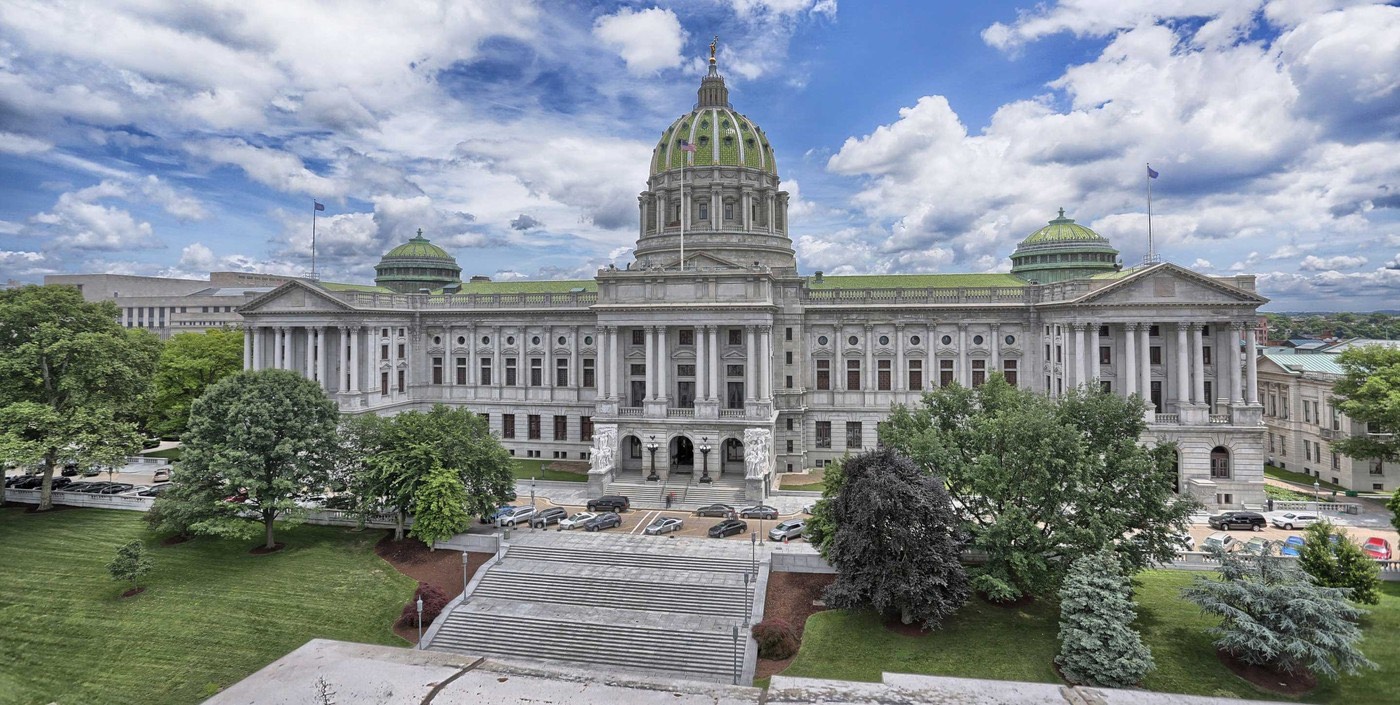
The Jaybird Foundation advocates to ensure state and federal programs work to preserve historic places.
Advocate for Historic Preservation
Advocacy Resources
Partnering with State and Local Leaders
Strong relationships with state and local representatives are essential to advancing historic preservation and adaptive reuse. These leaders influence policies, funding, and zoning decisions that shape the future of our historic places. By engaging them with community success stories and emphasizing the economic and cultural value of preservation, we can build champions who help protect heritage while driving revitalization.
Historic Tax Credits
The Federal Historic Tax Credit (HTC) is one of the most effective tools for preserving our nation’s historic buildings while driving economic growth. Yet, its value has eroded over time due to rising costs, inflation, and legislative changes. Strong advocacy is needed to protect and strengthen this critical program.
Key Advocacy Issues
Strengthening the HTC
The bipartisan Historic Tax Credit Growth and Opportunity (HTC-GO) Act (H.R. 2941/S. 1459) proposes key improvements to ensure the HTC remains viable for communities nationwide:
-
Increased credit for small projects – Boosts the credit to 30% for small and rural projects, making preservation feasible in underserved areas.
-
Transferability – Allows credits to be directly transferred, reducing financial complexity for small and mid-sized projects.
-
Elimination of basis adjustment – Makes it easier to combine the HTC with other incentives like the Low-Income Housing Tax Credit (LIHTC).
Vigilance Against Threats
Proposed tax reforms could weaken or eliminate the HTC. Preservationists must stay alert and unified in defending the credit.
Showcasing Economic Impact
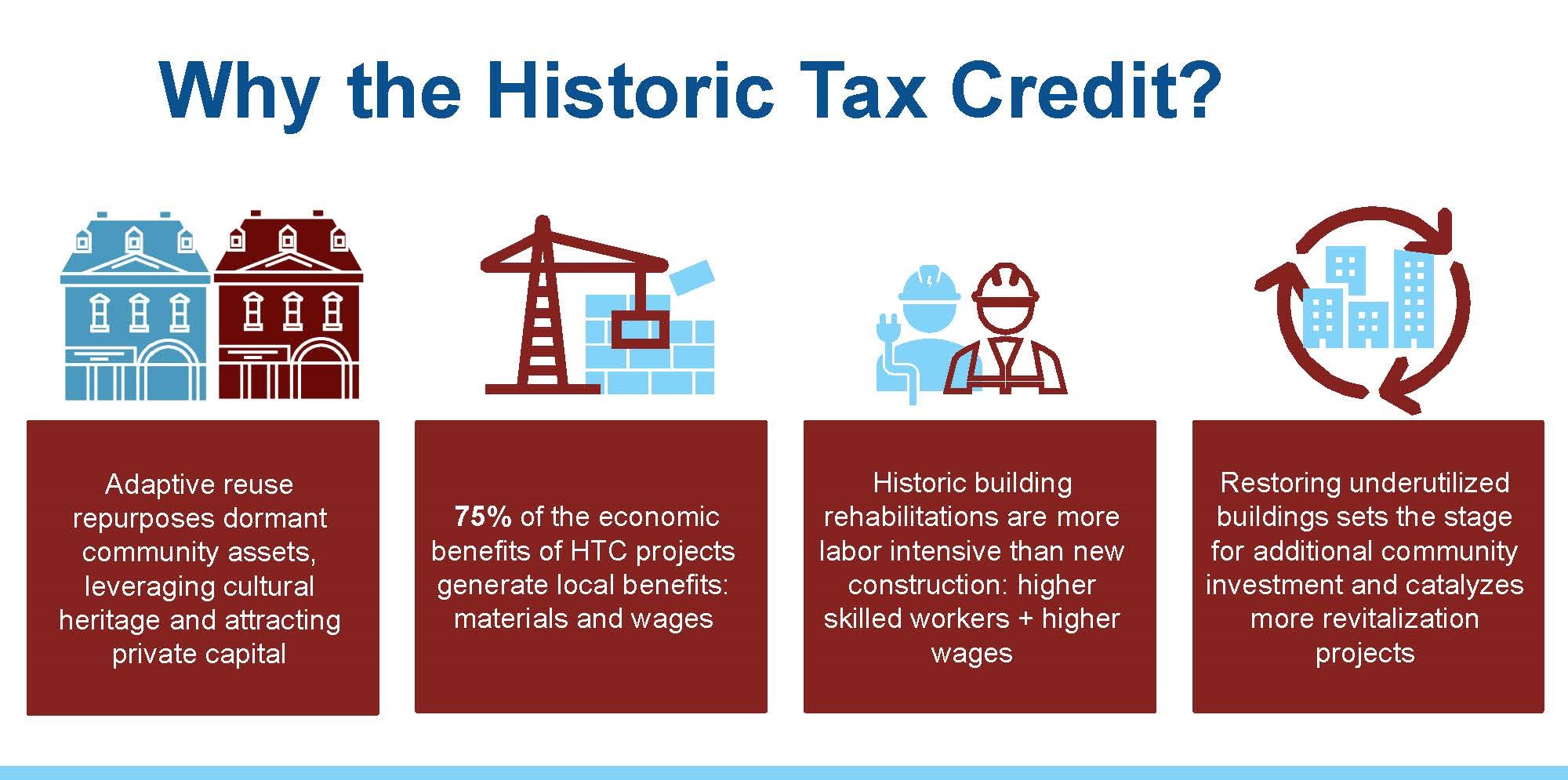
For every dollar invested, the HTC delivers jobs, housing, and private investment. Advocacy must highlight this proven record of community revitalization.
How to Get Involved
-
Join national efforts – Connect with the Historic Tax Credit Coalition (HTCC) or the National Trust for Historic Preservation to receive updates and action alerts.
-
Participate in campaigns – Write letters, attend lobby days, or use online advocacy tools to reach your representatives.
-
Engage locally – Share success stories of HTC projects in your community. Use mapping tools to show the direct benefits of these investments.
Why Advocacy Matters
The HTC is more than a financial incentive, it is a catalyst for revitalization. It protects historic places, generates jobs, creates housing, and spurs private investment in neighborhoods across America. Without strong advocacy, its power to transform communities will continue to diminish.
Together, we can ensure the Historic Tax Credit remains a powerful tool for preservation and economic growth.
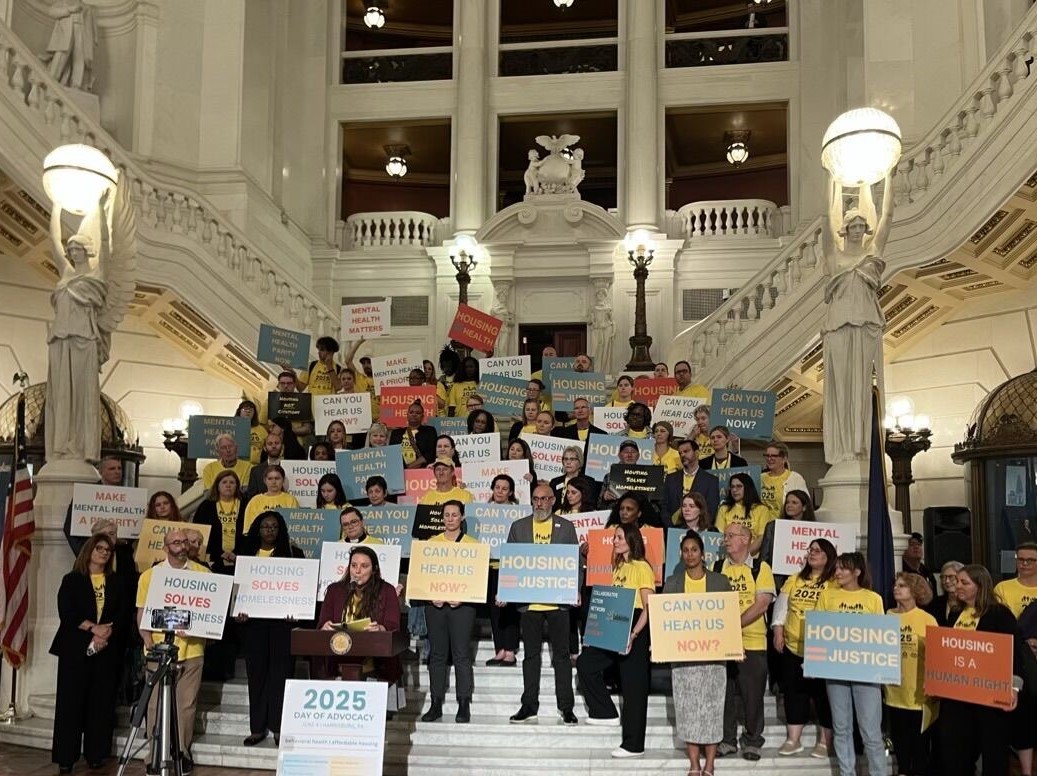
Annual Advocacy Day in Harrisburg for Economic Development
Preservation Groups
-
Preservation PA – https://www.preservationpa.org/
-
National Trust for Historic Preservation – https://savingplaces.org/
-
Montgomery County Historical Society – https://hsmcpa.org/
Key Local Issues
1. Funding and Incentives
Expand and protect state, federal, and local funding streams, including grants, revolving loan funds, and other mechanisms that make preservation financially feasible for communities and property owners.
2. Adaptive Reuse and Community Revitalization
Encourage policies that make it easier to repurpose historic structures for housing, small businesses, cultural spaces, and community services, strengthening neighborhoods while reducing waste.
3. Regulatory and Policy Barriers
Streamline building codes, zoning, and permitting to better accommodate historic structures without compromising safety, accessibility, or long-term stewardship, while addressing “demolition by neglect.”
4. Climate Change and Sustainability
Position preservation as a climate strategy by emphasizing the environmental benefits of reusing existing buildings, reducing demolition waste, and safeguarding sites threatened by flooding, storms, and other environmental risks.
Join us in preserving local history — get involved today!
Our vision is to restore historical properties and create an environment for organizations and businesses to connect to the community.